
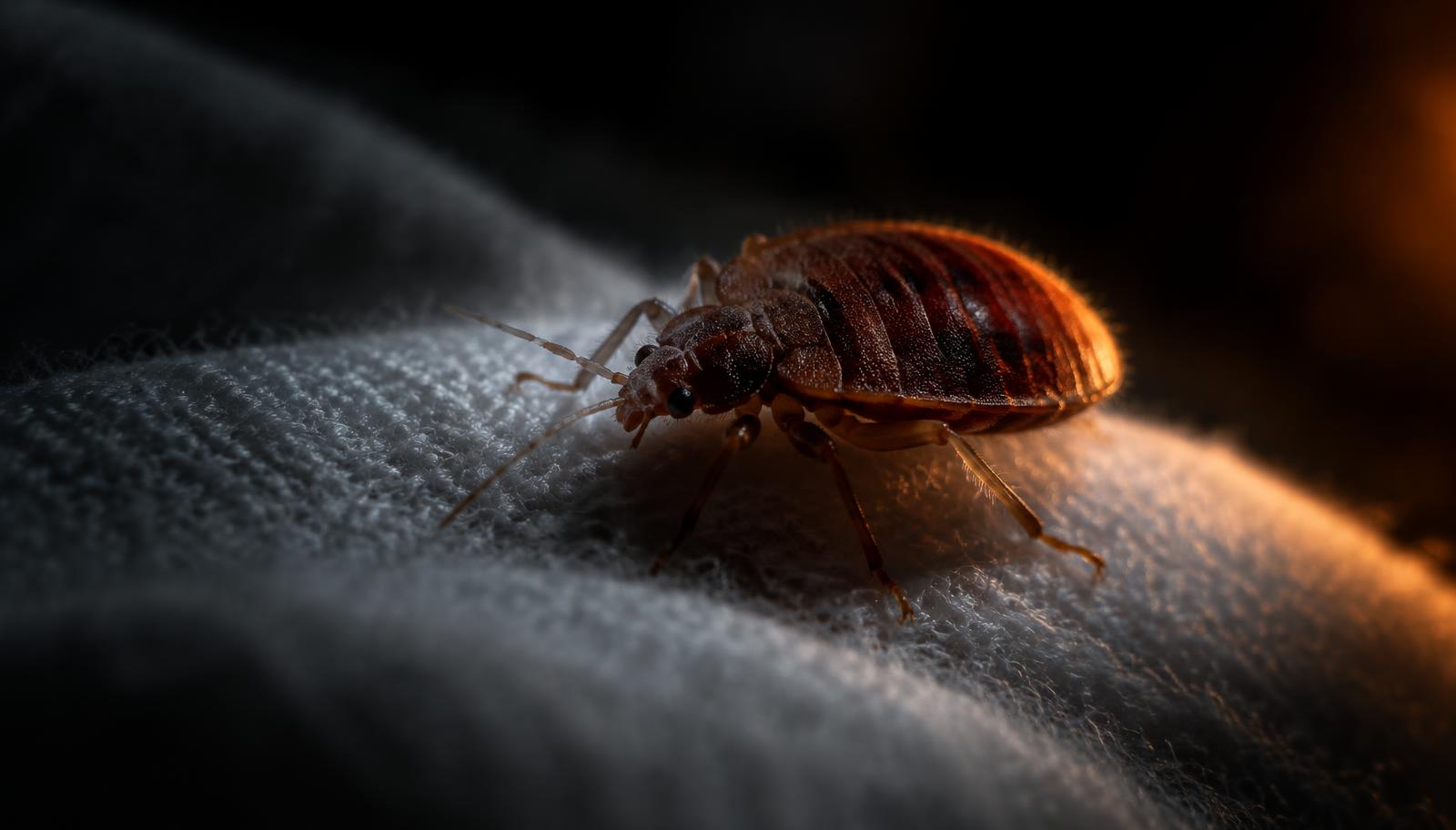
 Illustrative image
Why are bed bugs attracted to you?
How does a tiny, flightless insect locate a sleeping human in complete darkness?
Every night, millions of people go to sleep without considering the chemical and thermal signals their bodies release. For bed bugs, some of those signals can help reveal the presence of a potential host.
The evidence files
Four signals under investigation
Researchers have examined how bed bugs locate a host. Four host-associated signals come up again and again — some well established, some still being investigated. Here is what the evidence actually says.
Exhibit A
Carbon dioxide
Every breath you exhale releases carbon dioxide, and a sleeping person produces a gentle plume of it through the night. Entomology research describes carbon dioxide as a host-associated cue for bed bugs: exposure to it increases their activity and host-seeking behaviour.
In plain English, your breathing does not act like a sat-nav beam — but a change in carbon dioxide around a resting person is one of the signals associated with bed bugs becoming active and searching.
Conceptual diagram: with every breath, exhaled carbon dioxide disperses into the room around a sleeping person.
Exhibit B
Body heat
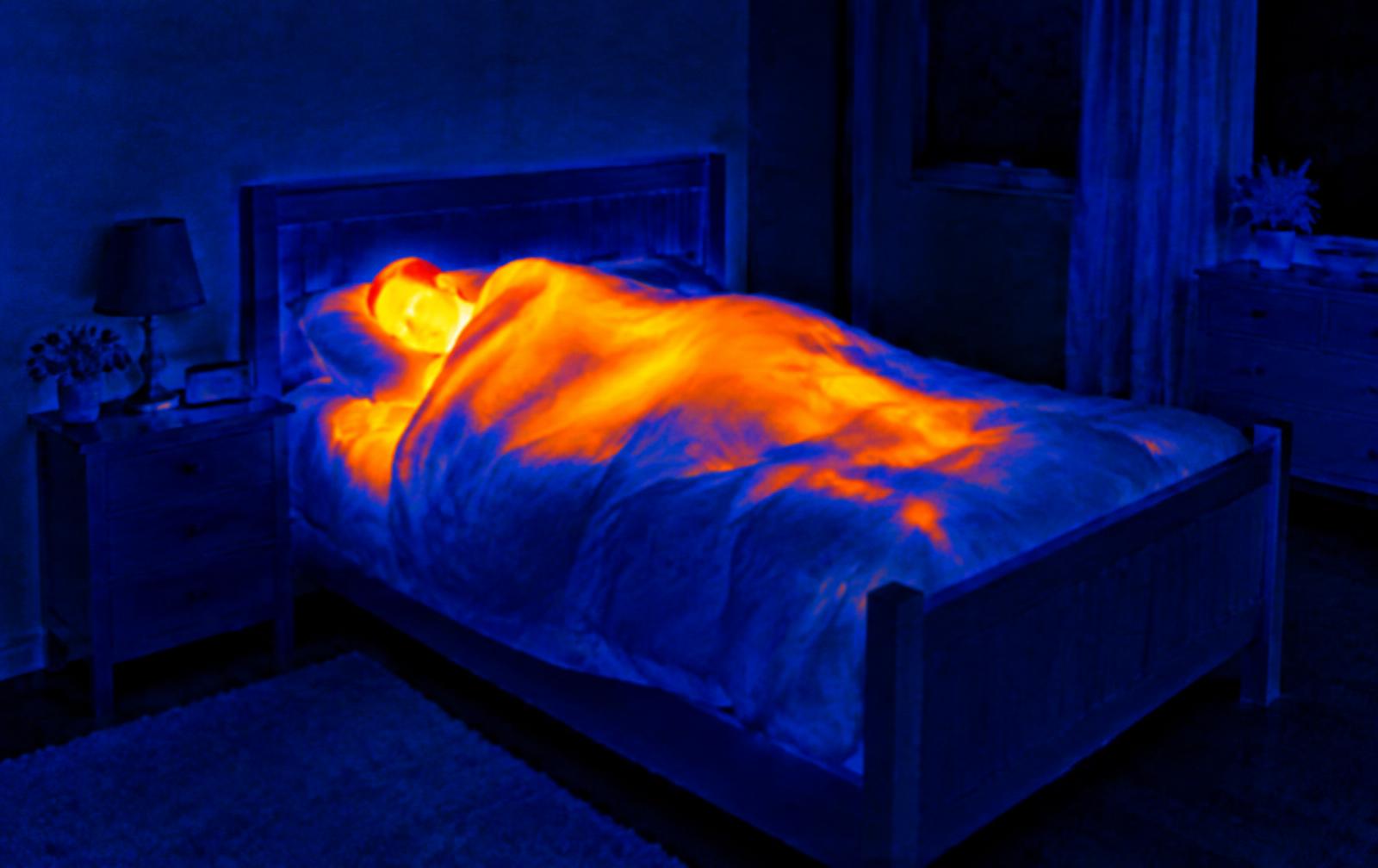
A sleeping human is a warm object in a cooler room. Research on bed bug behaviour indicates that warmth can help the insects orient towards a potential host, particularly at close range — warmth matters most once the insect is already nearby.
This is one reason bed bugs are found so close to where people sleep: the final approach to a host appears to be guided at short distance, with heat playing a supporting role.
 Illustrative image
Exhibit C
Human odour
Human skin releases a mixture of chemical compounds, and research suggests some of these compounds may contribute to host-seeking behaviour. This is an active area of study: scientists have identified candidate compounds, but the picture is not complete.
What is established is that bed bugs respond to chemical cues associated with humans. What remains under investigation is exactly which compounds matter most, and how much they explain differences between individual people.
Exhibit D
Darkness and host availability
Bed bugs are commonly active at night for a practical reason: that is when a host lies still and available for long enough to feed on. Public health sources note, however, that they do not require complete darkness — a hungry bed bug can feed in daylight or with the lights on.
Night-time activity is about opportunity, not a hard biological rule. Darkness is when the host is easiest to reach, not the only time feeding is possible.
The interactive host-detection experiment
Can a bed bug find you?
Switch the host-associated cues on and off and watch how the demonstration changes. The bed bug stays concealed, emerges, or moves across the room depending on the signals you illustrate.
Interactive experiment
Can a bed bug find you?
Switch the host-associated cues:
With no host-associated cues illustrated, the bed bug stays concealed in its harbourage.
Scientific safeguard: This is a conceptual educational simulation, not a validated prediction of insect movement. It illustrates signals researchers associate with host-seeking; it does not show real detection distances, attraction percentages or guaranteed behaviour.
The big mystery
Why does one person get bitten and another doesn't?
 Illustrative image
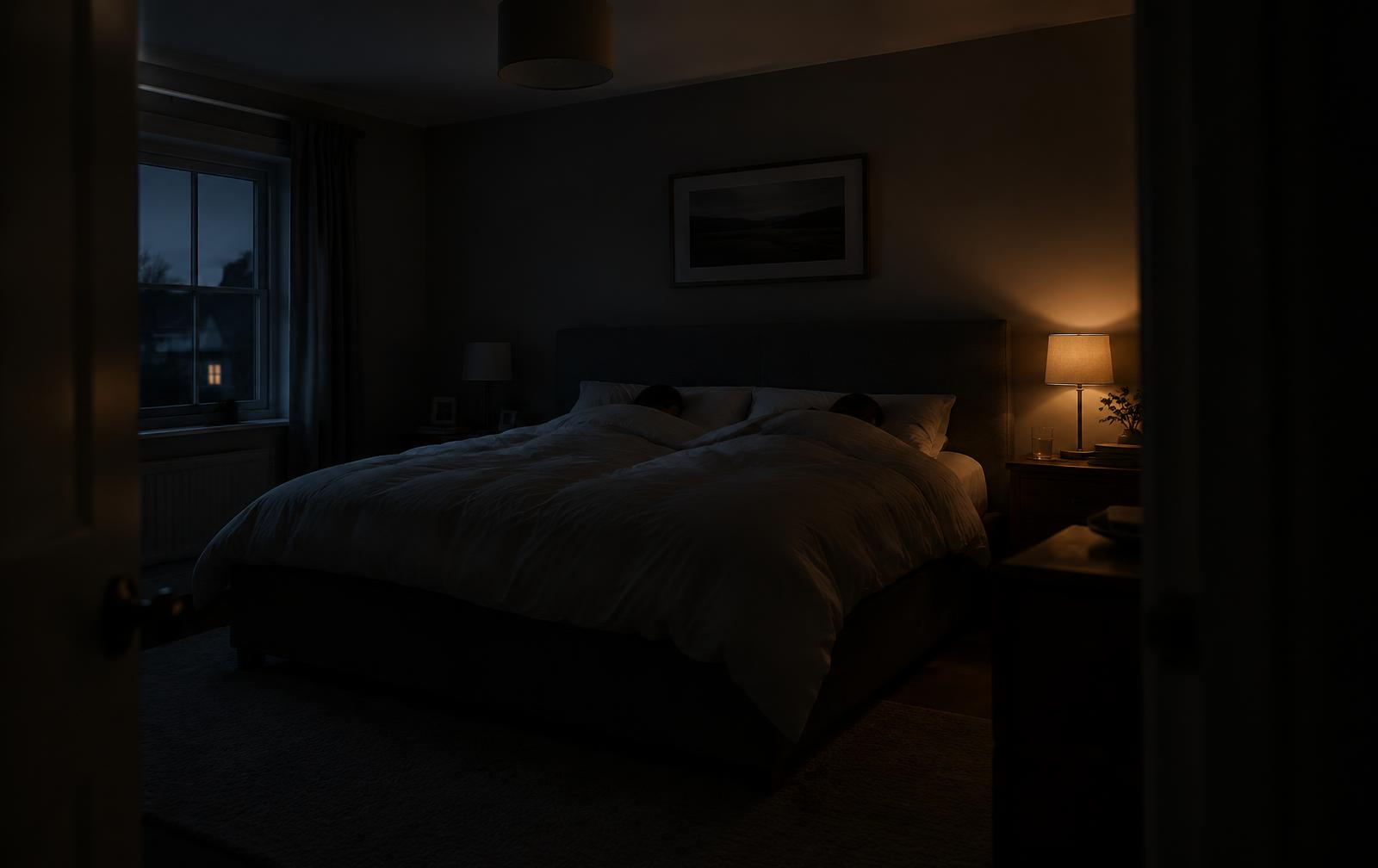
Two people can share the same bed, in the same infested room, and wake up with completely different stories to tell. One shows itchy marks; the other shows nothing at all. It looks like the bed bugs chose — but the science points somewhere else.
This person develops noticeable itchy marks after being bitten. Their immune system reacts to the bite, so the evidence shows up on their skin — sometimes hours or days later.
The lesson: being bitten and reacting visibly are two different things. The absence of bite marks does not establish that someone has not been bitten, and visible reactions alone cannot confirm a bed bug infestation. There is insufficient evidence to conclude that bed bugs consistently prefer one person over another based on their visible bite reactions.
The myth investigation
Bed bug attraction — fact or fiction?
Eight claims that circulate widely, examined against the available evidence. Open each card for the verdict — and notice how often the honest answer is that the evidence simply is not there.
Reconstructing the sequence
How a bed bug tracks its host
- 1
Concealed in a harbourage
A bed bug rests out of sight — in a mattress seam, a bed-frame joint or a gap behind a skirting board — digesting its last meal.
- 2
Host-associated signals become available
Someone settles down to sleep. Breathing releases carbon dioxide, the body radiates warmth, and skin releases chemical cues.
- 3
Emerging and orienting
The insect becomes active and leaves its harbourage, orienting in the general direction of the potential host.
- 4
Movement across the bedroom
It crawls — bed bugs cannot fly or jump — across the bed frame, bedding or floor towards the sleeping person.
- 5
Feeding through exposed skin
It feeds on exposed skin, typically for several minutes, usually without waking the sleeper.
- 6
Returning to a hiding place
After feeding, it returns to a protected harbourage to digest — often the same crevice it left.
This represents a possible sequence based on established behavioural research. It is not a universal pattern that every bed bug follows in every home.
Now turn the tables.
Bed bugs are remarkably good at finding us. But how good are you at finding them? Explore a real bedroom scene and discover the eight places bed bugs hide — no clues, no markers, just your eyes.
When the investigation is over
Why hiding places make professional treatment matter
Everything in this case file works in the bed bug's favour: it shelters in cracks and crevices close to where you sleep, emerges when signals are right, and returns to cover before you wake. Those same hiding places are what make an established infestation difficult to address with shop-bought products.
Professional heat treatment works differently: rather than chasing insects out of their harbourages, the treatment area is heated as a monitored whole. Our approved treatment target is 56°C. The target applies to the treatment as a monitored whole. A single reading at one position does not, on its own, demonstrate what happened across the treatment environment, which is why multiple positions are monitored and recorded during treatment.
Simply warming a room is not the same thing. Appropriate temperatures, exposure, heat distribution and monitoring all matter — and no treatment outcome should be guaranteed without considering the conditions of the property and the actual treatment carried out.
What this case file does — and does not — claim
- Carbon dioxide, warmth and odour are host-associated cues supported by research.
- The interactive experiment is a conceptual simulation, not a prediction of real insect movement.
- Visible bite reactions vary between people; bites alone cannot confirm an infestation.
- No attraction percentages, detection distances or guaranteed outcomes are stated anywhere on this page.
If you suspect bed bugs in your property, identification comes first — then a professional assessment establishes the extent of the problem and the right response.
Related Bed Bug Heat Experts UK guidance
References and sources
- Reinhardt & Siva-Jothy — Biology of the Bed Bugs (Cimicidae), Annual Review of Entomology, 2007
- University of Kentucky Entomology — Bed Bugs (ENTfact-636)
- NHS — Bedbugs
- CDC — About bed bugs
- US EPA — Bed bugs
- CCOHS — Bed bugs
Only sources actually used in preparing this page are listed. Where the science is unsettled, this page says so rather than presenting speculation as fact.