
Bed Bugs and Travel:Hotels, Airbnbs and Bringing Them Home
A little care with your room and your luggage can make a difference. Here’s what to check, what to do if something looks wrong, and how to come home without unnecessary worry.
 Illustrative image
Enjoy the trip. Take sensible precautions. Don’t mistake a precaution for a guarantee.
Bed bugs can travel in luggage, clothing and other belongings. That does not mean every holiday or commute brings them home. This guide follows the practical decisions you make during a journey, rather than listing every place the insects can live.
For the wider picture of hiding places and hitchhiking, read Where Can Bed Bugs Be Found? The advice below draws on public-health and university entomology guidance, with the relevant sources linked beside key recommendations.
Travel advice / 01
Arriving: pause before you unpack
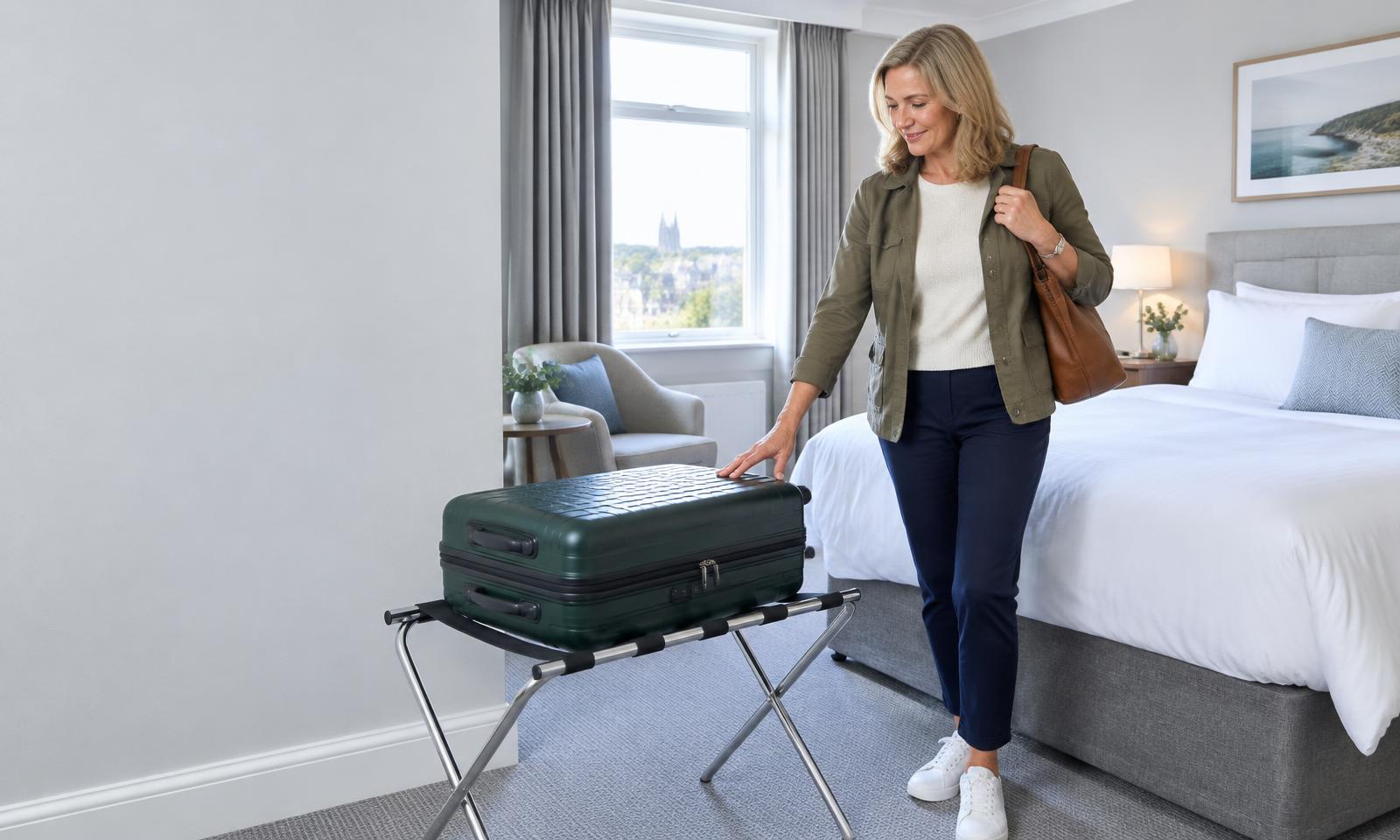
The temptation is familiar: suitcase on the bed, coat on the chair, then settle in. Instead, keep bags closed while you have a look around. Avoid placing luggage on the bed or upholstered furniture.
An inspected luggage rack is a useful place to keep a bag away from the sleeping area. Check its straps, folds and attachment points as well as the frame; racks themselves can harbour insects. Position it away from the bed, walls and upholstery where practical.
If there is no suitable rack, Health Canada recommends a tiled surface away from upholstered areas as a temporary place while checking. This is a practical separation measure, not a claim that tiles repel bed bugs. Keep luggage out of the way of doors and other people.
Guidance: US EPA — Tips for Travel (opens in a new tab) and Health Canada — How do I avoid bedbugs when travelling? (opens in a new tab).
Travel advice / 02
A short, sensible look at the room
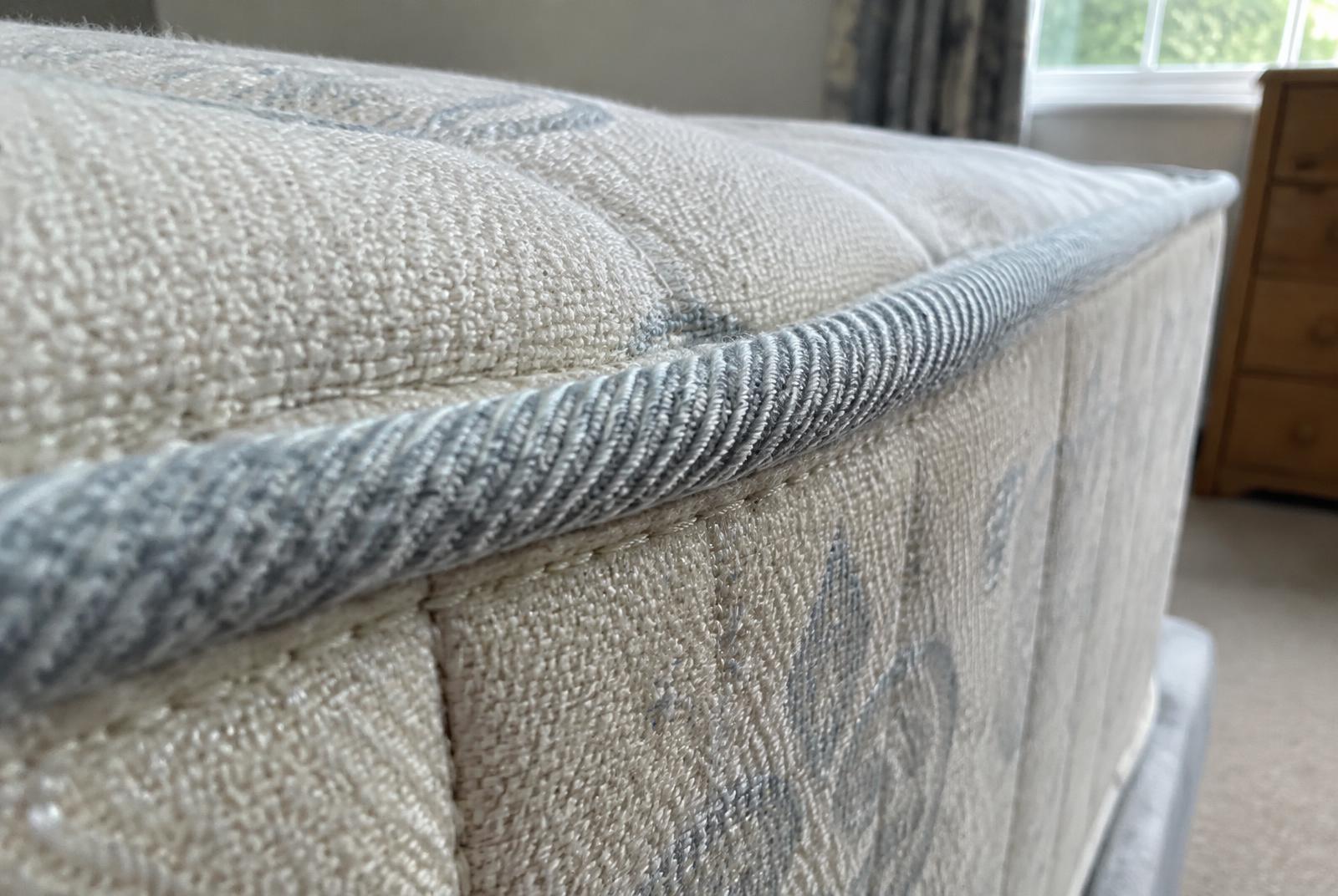
Focus on the bed and accessible nearby hiding places before spreading your belongings around. Look along mattress piping, seams and folds, at accessible bed-frame joints, and around the visible edges of the headboard. Only lift a mattress edge if you can do so safely and without straining yourself.
 Illustrative image
Look for live insects, shed skins, tiny pale eggs or dark spotting. A stain can have several explanations, and many small insects are not bed bugs. Our Signs of Bed Bugs and identification guidance explain the difference.
Do not unscrew sockets, remove fixed headboards, tear fabric coverings or move heavy furniture. This is a guest’s visual check, not a professional inspection. No signs found means no signs found — it does not prove the room is clear.
Inspection advice: Health Canada — How do I avoid bedbugs when travelling? (opens in a new tab). Physical signs: University of Kentucky Entomology — Bed Bugs (ENTFACT-636) (opens in a new tab).
Travel advice / 03
If you find something suspicious
Stop unpacking. Take a clear photograph of the insect or signs if you can do so safely, note where you found them, and speak to reception or the accommodation host. Describe what you have seen rather than presenting an unidentified insect as a confirmed infestation.
Ask the provider to investigate and arrange suitable alternative accommodation. Health Canada advises that a replacement room should not be immediately next to the suspect room, and that it should also be checked. In an Airbnb or other rental, speak to the host or accommodation provider about your options.
Do not simply carry open bags onto another bed. If belongings may have been exposed, keep them contained and discuss appropriate handling. Moving rooms does not automatically remove insects already concealed in luggage, and an apparently better room is not a guarantee.
Skin marks need a different kind of caution. The CDC says the inflammatory reaction is not diagnostic for bed bugs; reactions can be delayed and some people do not react visibly. A rash alone cannot establish the insect, the room or the journey responsible. Seek medical advice for concerning symptoms rather than relying on online identification of bites.
Sources: Health Canada — How do I avoid bedbugs when travelling? (opens in a new tab), CDC — About Bed Bugs (opens in a new tab) and CDC DPDx — Bed Bugs: Laboratory Diagnosis (opens in a new tab).
Travel advice / 04
During your stay: keep things simple
You do not need to turn a holiday into a constant search. Keep your suitcase closed when you are not using it, leave it on the inspected rack where possible, and avoid scattering clothing across beds and upholstered furniture. Keeping belongings together also makes them easier to check later.
Contain worn clothing in a bag for the journey home, particularly if you have a specific concern about exposure. Do not treat containment as a way of killing insects: a bag limits movement while it remains intact and closed, but it is not an elimination method.
Avoid spraying luggage, beds or clothing with improvised remedies. Perfume, essential oils and a quick aerosol spray should not be relied on to prevent hitchhiking. Do not apply pesticides to yourself or your belongings unless the product is specifically authorised for that use and all label instructions can be followed; raise accommodation concerns with the provider instead.
Closed-luggage advice: Health Canada — Don't bring bedbugs back from your vacation (opens in a new tab). Limits of common remedies: University of Kentucky Entomology — Bed Bugs (ENTFACT-636) (opens in a new tab).
Travel advice / 05
Hostels and budget accommodation
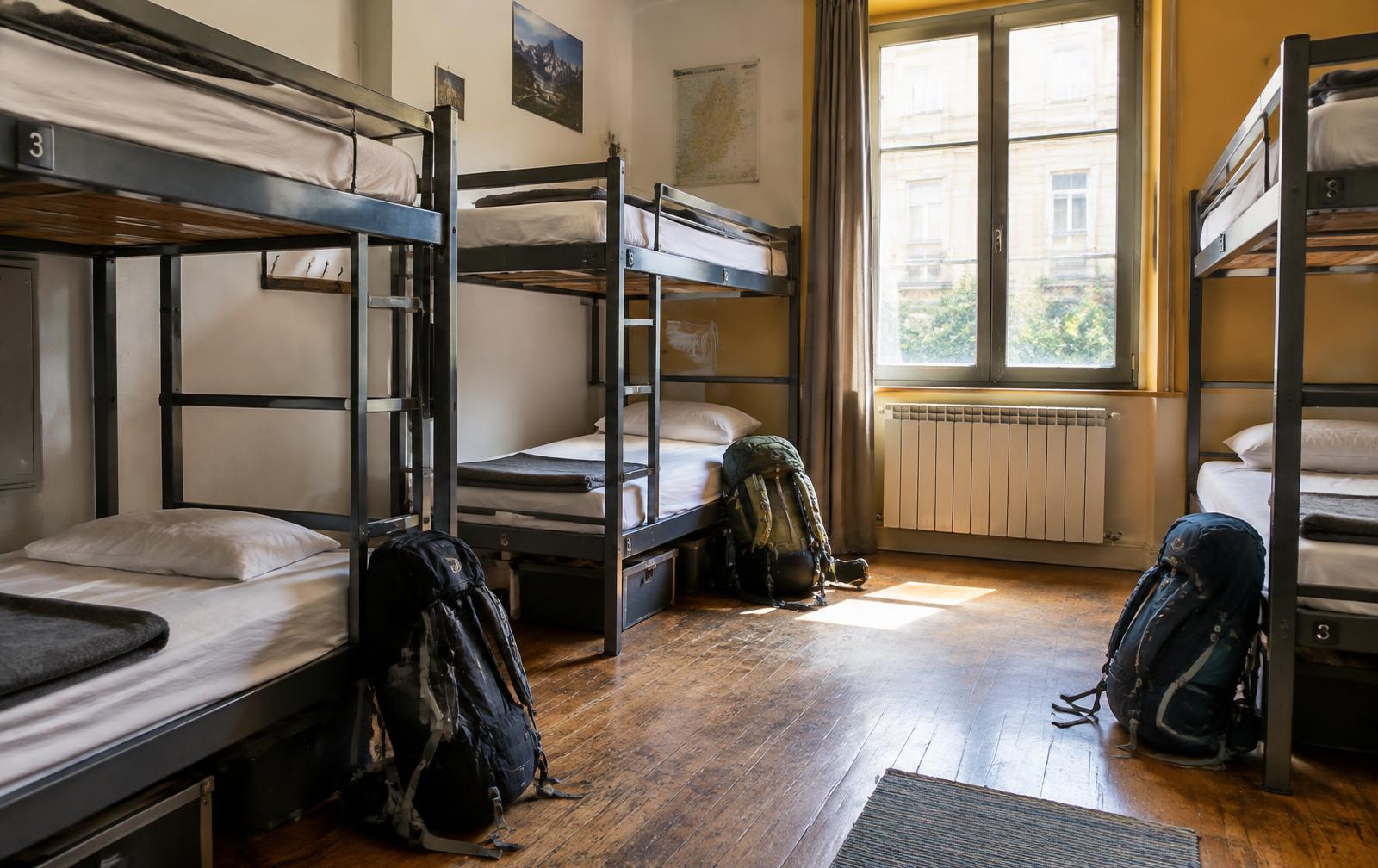
Gap-year travellers, students and backpackers often stay in shared dormitories, and many hostels welcome a constant flow of guests from all over the world. That turnover is exactly what gives hitchhiking insects opportunity: every arrival brings luggage, and luggage is how bed bugs travel. BHE UK has carried out heat treatments in hostel accommodation, where the sheer number of people coming and going makes vigilance worthwhile.
 Illustrative image
 Illustrative image
 Illustrative image
The same principles apply as in any other room. Keep your backpack off the bed where you can, use a locker or a hard-surfaced spot away from sleeping areas, and give the mattress seams and bed frame a quick look before you settle in. Bunk frames, with their joints and fixings, offer plenty of hiding places.
If you are travelling for weeks or months, do not let caution become a burden. A brief check on arrival and a closed bag are sensible habits, not a nightly investigation. If you spot something suspicious, tell the hostel staff so they can investigate — a good operator would rather know.
Room and luggage checks: US EPA — Tips for Travel (opens in a new tab) and Health Canada — How do I avoid bedbugs when travelling? (opens in a new tab). Hitchhiking on belongings: University of Kentucky Entomology — Bed Bugs (ENTFACT-636) (opens in a new tab).
Travel advice / 06
Public transport and daily commuting
University of Kentucky entomology guidance includes public transport among places where bed bugs can occur. The insects can hitchhike on belongings, so a finding should be taken seriously — but the sources here do not quantify the chance of bringing one home from an individual bus or train journey.
A single suspected insect is not proof of an established infestation in a vehicle, and it certainly does not prove a problem in your home. If you see something, avoid placing your belongings directly beside it, photograph it if practical, and report the location to the operator so it can be investigated.
Check the belongings involved if there is a credible concern. A routine commute, without a sighting or other evidence, is not a reason to undertake daily decontamination rituals or discard clothing. Keep the response proportionate to what you actually know.
Background: University of Kentucky Entomology — Bed Bugs (ENTFACT-636) (opens in a new tab). For how a hitchhiker differs from an established problem, see our wider hiding-place guide.
Travel advice / 07
Coming home: unpack thoughtfully
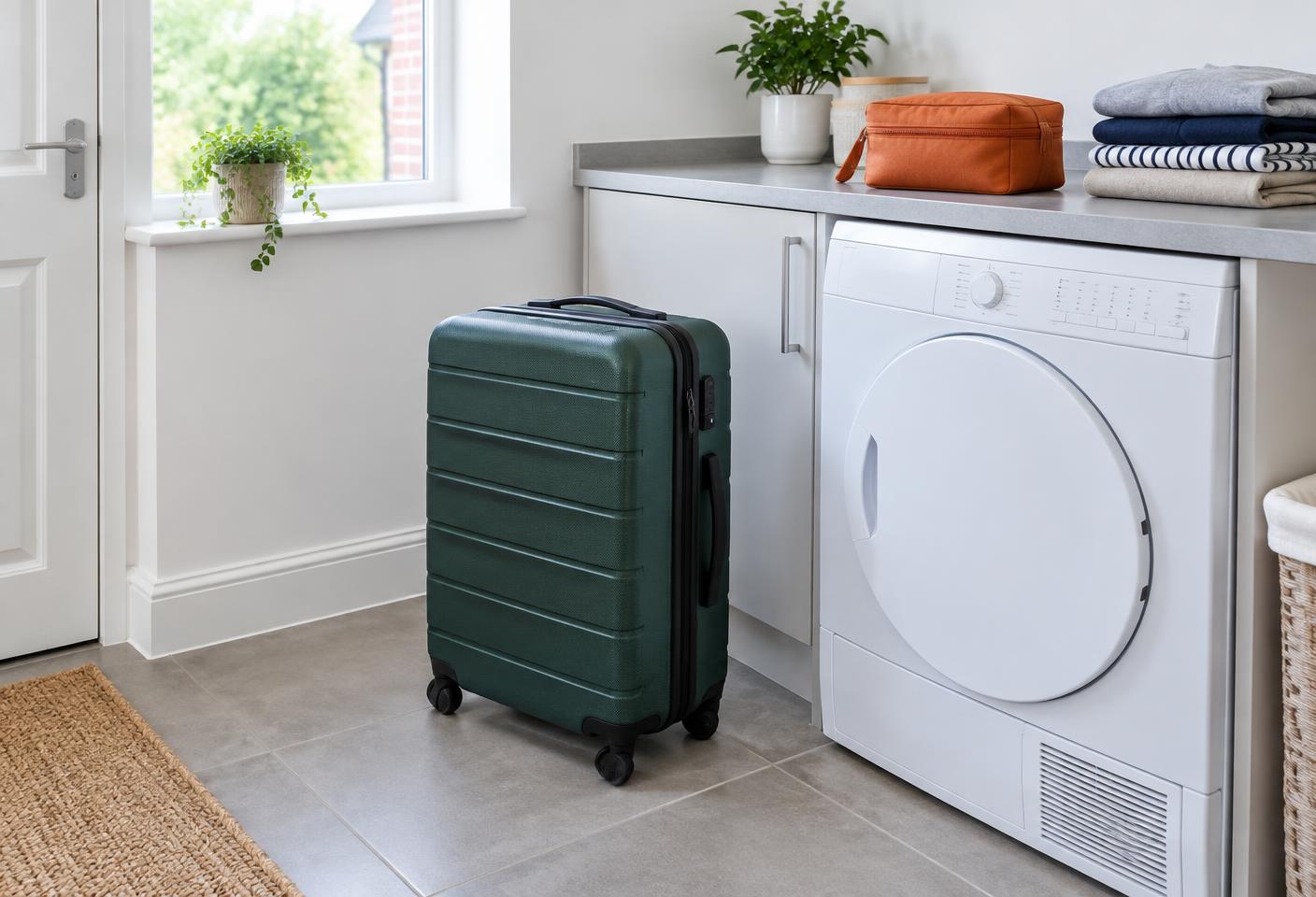
Keep the suitcase off your bed. Choose a hard-surfaced area away from sleeping spaces where you can see what you are doing. If you suspect exposure, keep belongings contained until you can handle them deliberately, rather than spreading them through the home.
 Illustrative image
Keep it off the bed
Choose a hard-surfaced unpacking area away from sleeping spaces.
Check the details
Look at seams, zip folds, pockets, handles and compartments.
Handle suitable laundry
Contain suspect clothing; use fabric-safe, evidence-based drying guidance.
Store thoughtfully
Keep suitcases away from the bedroom, rather than under the bed.
Laundry: the drying step matters
Washing alone may not reliably kill every life stage. The EPA emphasises heat drying, and Health Canada advises washing and drying clothing at the hottest temperature the fabric can safely withstand. Follow the care label and the Health Canada — Don't bring bedbugs back from your vacation (opens in a new tab) guidance for suitable dryer use; do not assume that any brief or low-temperature cycle is effective.
If the care label prohibits tumble drying, or an item cannot tolerate the recommended conditions, seek appropriate item-specific advice. Do not extrapolate clothing guidance to a whole suitcase, electronics, shoes or heat-sensitive possessions. Never improvise treatment with an oven, hairdryer or room heater.
The suitcase itself
Check zip folds, seams, pockets, handles and compartments carefully. A negative visual check is not proof of absence: the insects can remain concealed. Health Canada also recommends vacuuming luggage and promptly disposing of the vacuum contents in a sealed bag. Vacuuming may remove insects you reach, but is not guaranteed elimination.
Store luggage away from sleeping areas, not underneath the bed, as the EPA recommends. If you find a suspected insect, keep the item isolated and arrange identification before choosing a response.
Returning-home sources: US EPA — Tips for Travel (opens in a new tab), Health Canada — How do I avoid bedbugs when travelling? (opens in a new tab) and University of Kentucky Entomology — Bed Bugs (ENTFACT-636) (opens in a new tab).
Travel advice / 08
Think you’ve brought them home? What a professional does about luggage
Once you have reason to think bed bugs came home in a bag, the question changes. It is no longer “how do I unpack carefully?” but “where else might they be now?” A suitcase that sat in a hallway or bedroom for a night may not be the only thing involved.
That is why a professional starts with the property, not the bag. An assessment looks at where the luggage was stored, where it was unpacked and which rooms show signs, so that the response matches what is actually there.
Luggage, rucksacks and the belongings that travelled with them are part of that conversation. When you ask BHE UK for a quotation, tell us about the trip, the bags involved and where they have been kept since you got home. We will explain what the treatment would cover and what it would not.
Detailed preparation guidance for customers, including what to do with bags before a treatment, is provided directly through the BHE UK Customer Portal once a treatment is booked.
Travel advice / 09
Travel questions, answered
Can a clean or expensive hotel have bed bugs?
Yes. Cleanliness and star ratings do not prevent insects arriving on guests' belongings. Apply the same sensible checks in a luxury hotel, a budget room or a holiday rental; appearance alone cannot establish whether bed bugs are present.
Are Airbnbs safer than hotels?
The accommodation label does not guarantee protection. A private rental can receive hitchhiking insects just as a hotel can. Look at the room and report evidence to the host or accommodation provider rather than assuming one type of stay is safe.
Does a hard-shell suitcase prevent bed bugs?
No suitcase should be described as bed-bug-proof. Zips, seams, pockets and belongings still deserve attention. A closed bag on an inspected rack is a sensible precaution, not a guarantee.
Can bites tell me which hotel or journey caused the problem?
Not reliably. The CDC explains that reactions vary and marks may appear days after exposure; some people have no visible reaction. Bites alone cannot confirm bed bugs or identify where they were encountered. Physical evidence and accurate insect identification matter.
Should I throw my suitcase away?
Not automatically. Keep a suspect suitcase away from sleeping areas and seek advice about inspection and appropriate handling. Do not donate or sell suspect belongings, and do not try to heat a suitcase in an oven or with improvised heaters. Disposal is not a substitute for assessing the rest of the problem.
Does washing everything get rid of bed bugs?
Washing alone may not reliably kill every life stage. Authoritative guidance emphasises appropriate heat drying for suitable fabrics. Follow the care label and the linked drying guidance; items that cannot safely tolerate it need a different, appropriate approach. Treating clothes does not eliminate an established infestation in a property.
Are hostels riskier than hotels?
Shared dormitories with a constant turnover of guests and backpacks create more opportunities for hitchhiking insects to arrive, and the sources cited here recognise that bed bugs travel on belongings. That does not mean every hostel has a problem, or that a hotel cannot. Apply the same room and luggage checks wherever you stay, and report anything suspicious to the operator rather than assuming the worst.
Do I need to treat my belongings after every bus or train journey?
Routine commuting alone is not evidence of an exposure. The sources cited here do not quantify the risk from an individual journey. If you actually see a suspected bed bug, report it to the operator and check the belongings involved proportionately; a sighting is not a diagnosis of an infestation in your home.
Travel advice / 10
When to ask for help
If you find signs at home after travelling, start with identification rather than assuming every mark is a bite or every insect is a bed bug. Keep a clear record of what you found and where. Our Could This Be Bed Bugs? page can help you decide what evidence to look for.
Where bed bugs are confirmed, a professional assessment can establish the extent of the problem and an appropriate response. BHE UK can discuss your property and whether heat treatment is suitable. There is no need to exaggerate an exposure, and no travel checklist can promise complete protection.
REQUEST A QUOTEThe aim is a proportionate response: precautions when travelling, accurate identification when concerned, and appropriate help when a problem is confirmed.